Discover the Colosseum | Ancient Rome's iconic amphitheatre

Is the Colosseum worth visiting? Our verdict

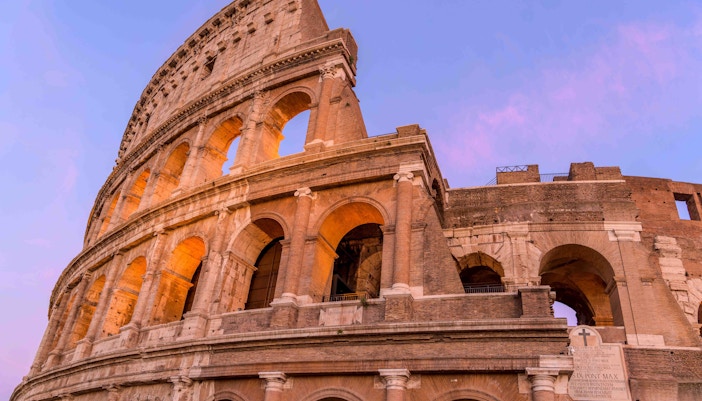
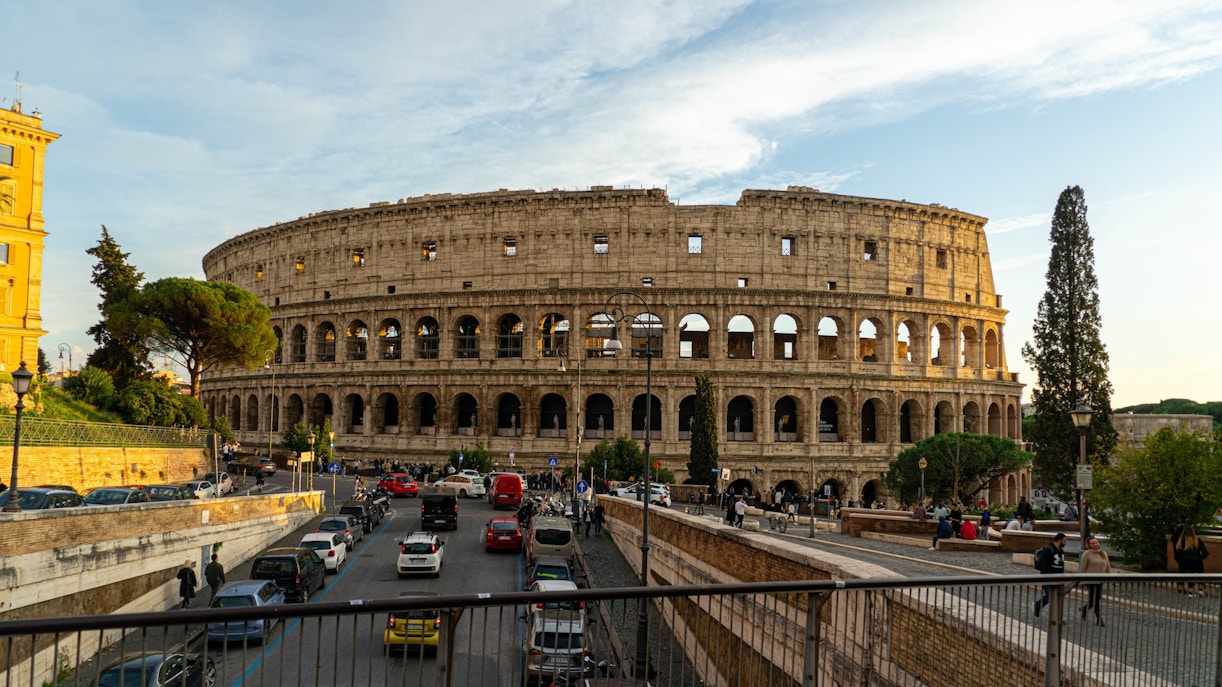
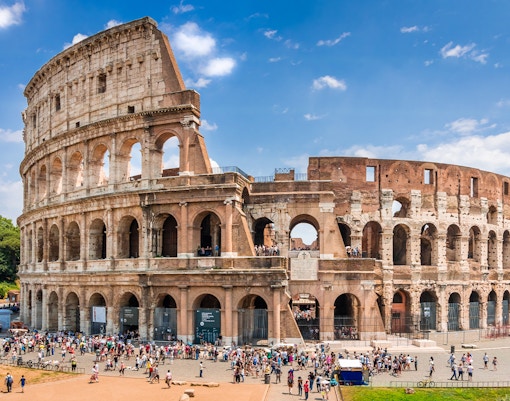
The Colosseum is one of those places that feels entirely different in person. At 188 meters long and originally built to seat 80,000 people, it’s hard not to be struck by its scale.

A standard visit usually takes two to three hours. If you want the fuller story, many Headout travelers recommend adding the Underground, also known as the Hypogeum, to your ticket.

Our data shows that the Colosseum is Headout’s most-booked attraction in Rome and the one most likely to exceed expectations. This page breaks down what to prioritize once you’re inside, what to expect before you go, and which experience is best for you.

The quick take

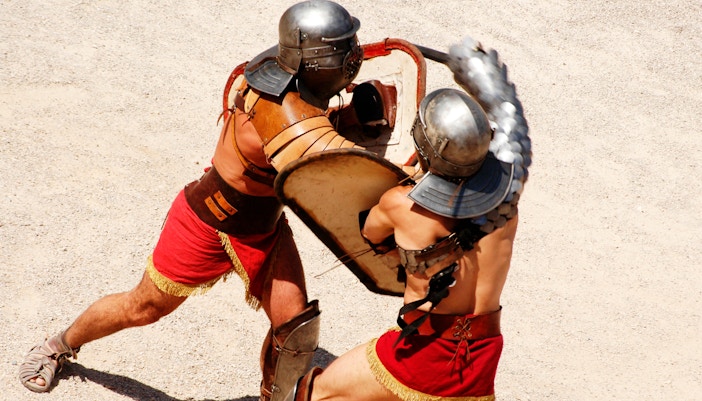
  • What it is: The largest surviving Roman amphitheater in the world, built between 70 and 80 AD under the Flavian emperors. It was used for gladiatorial combat and public spectacles for more than 400 years.
  • Tickets from €23 for timed entry, with wait times of 60–90 minutes or more during peak season for visitors buying tickets on-site.
  • Headout customer rating: 4.3 from 150,535 reviews. Customers consistently say the approach on foot is when the scale really hits them and that no photograph does it justice.
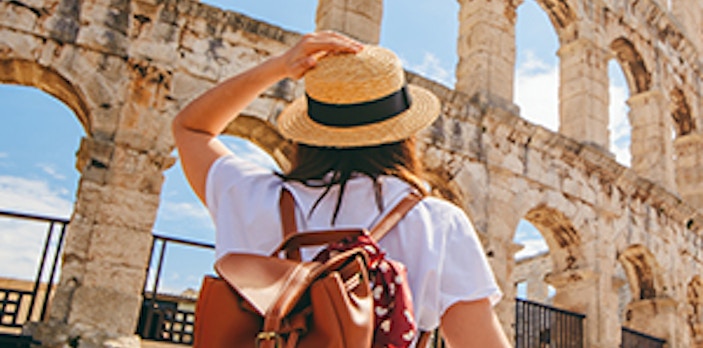
Traveler admiring the Colosseum in Rome, Italy, wearing a backpack and straw hat.

What to see at the Colosseum

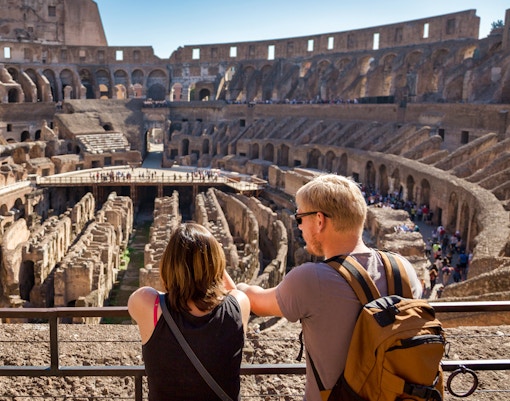
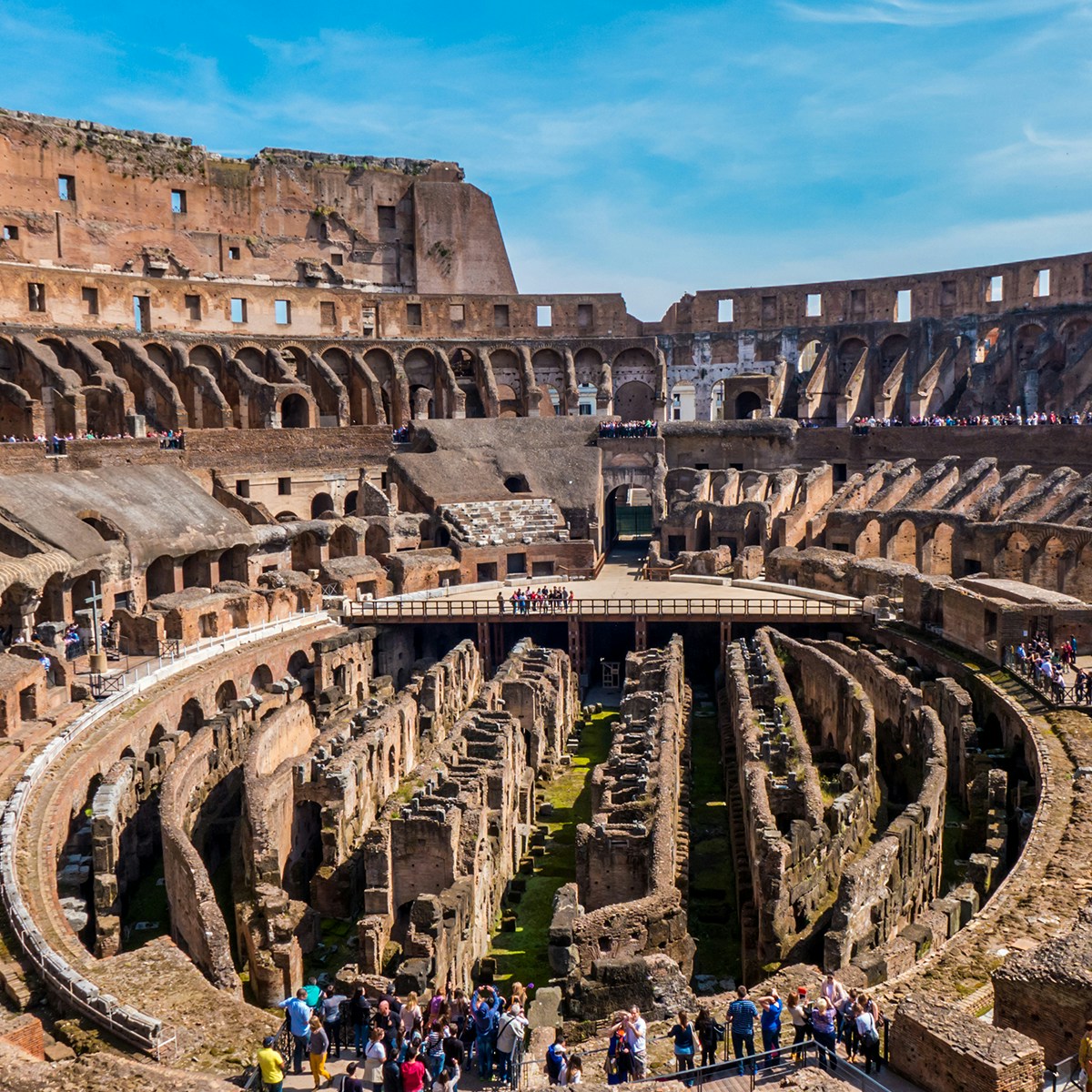
Colosseum interior with tourists exploring ancient Roman architecture in Rome, Italy.
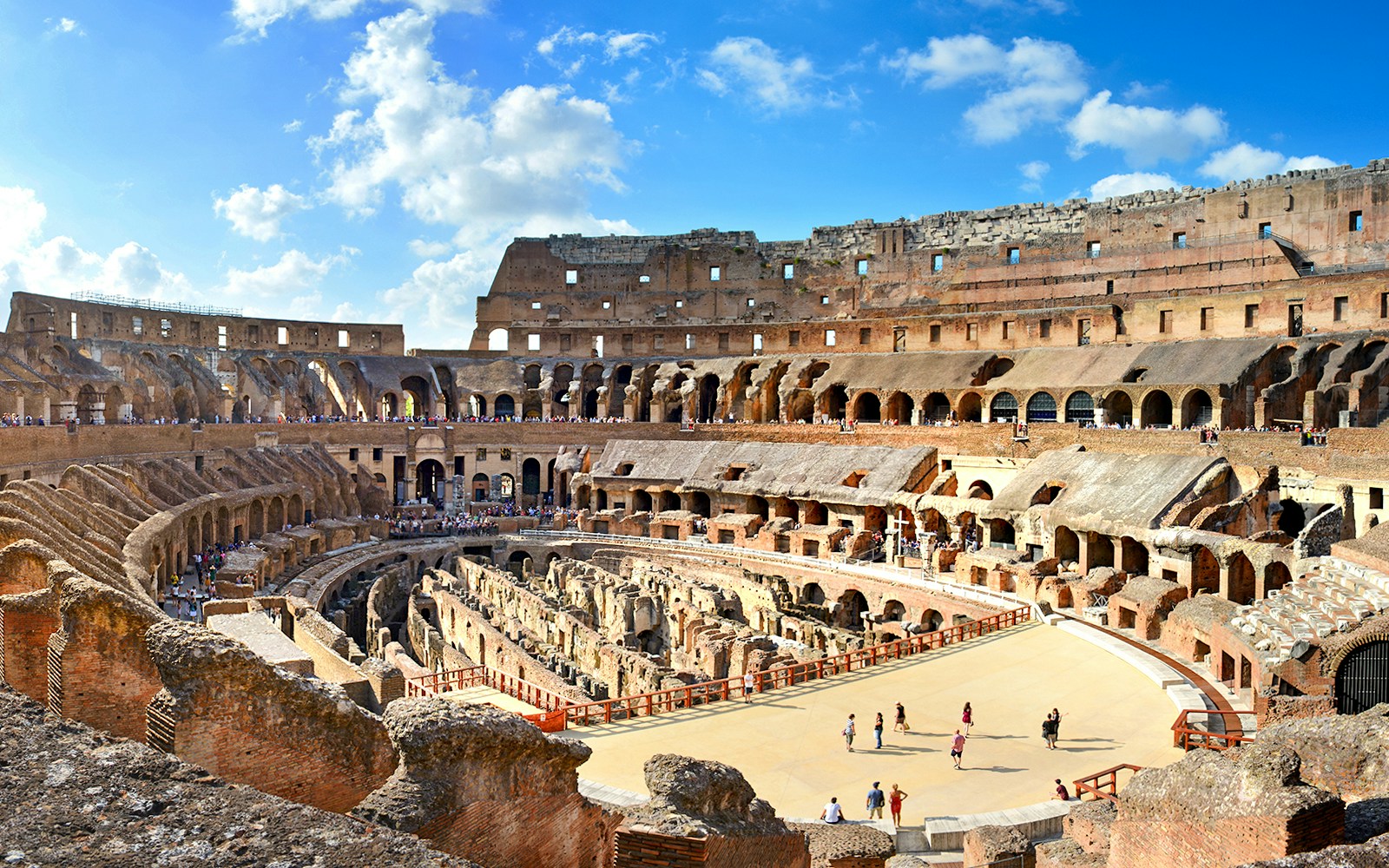
Colosseum Arena interior with tourists exploring ancient Roman architecture in Rome, Italy.
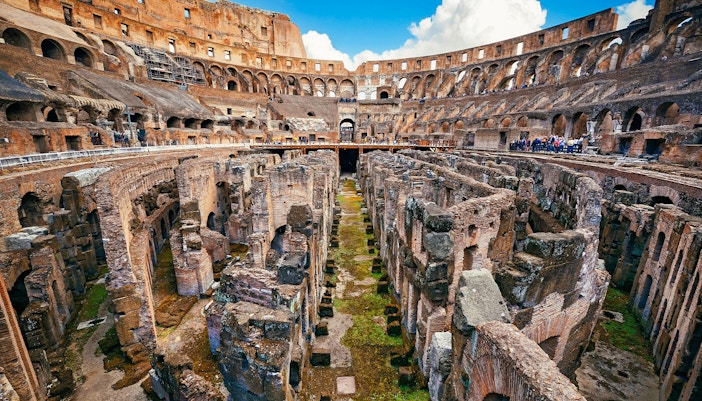
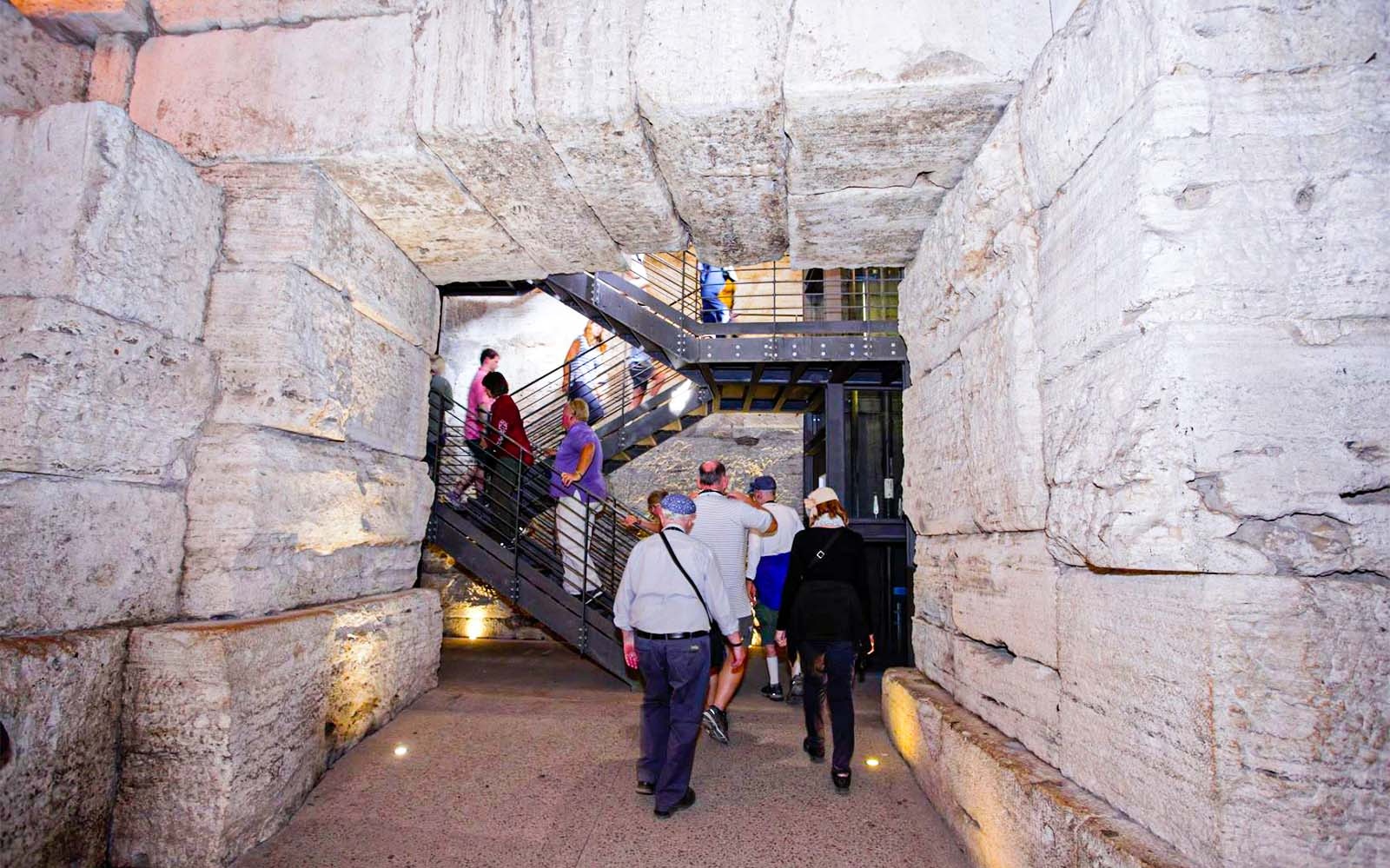
Visitors exploring the underground passage of the Colosseum in Rome.
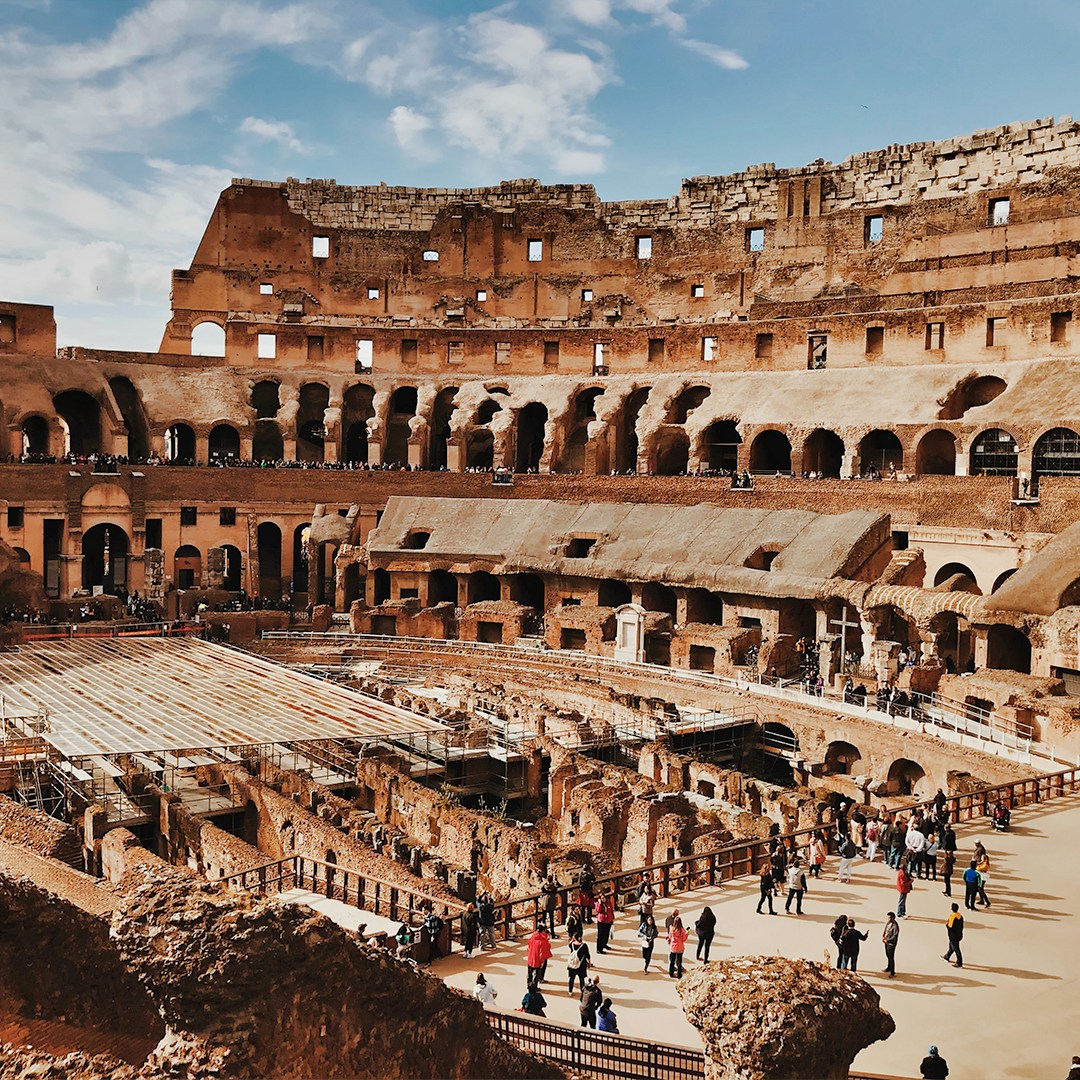
Colosseum interior with tourists exploring ancient Roman architecture in Rome, Italy.
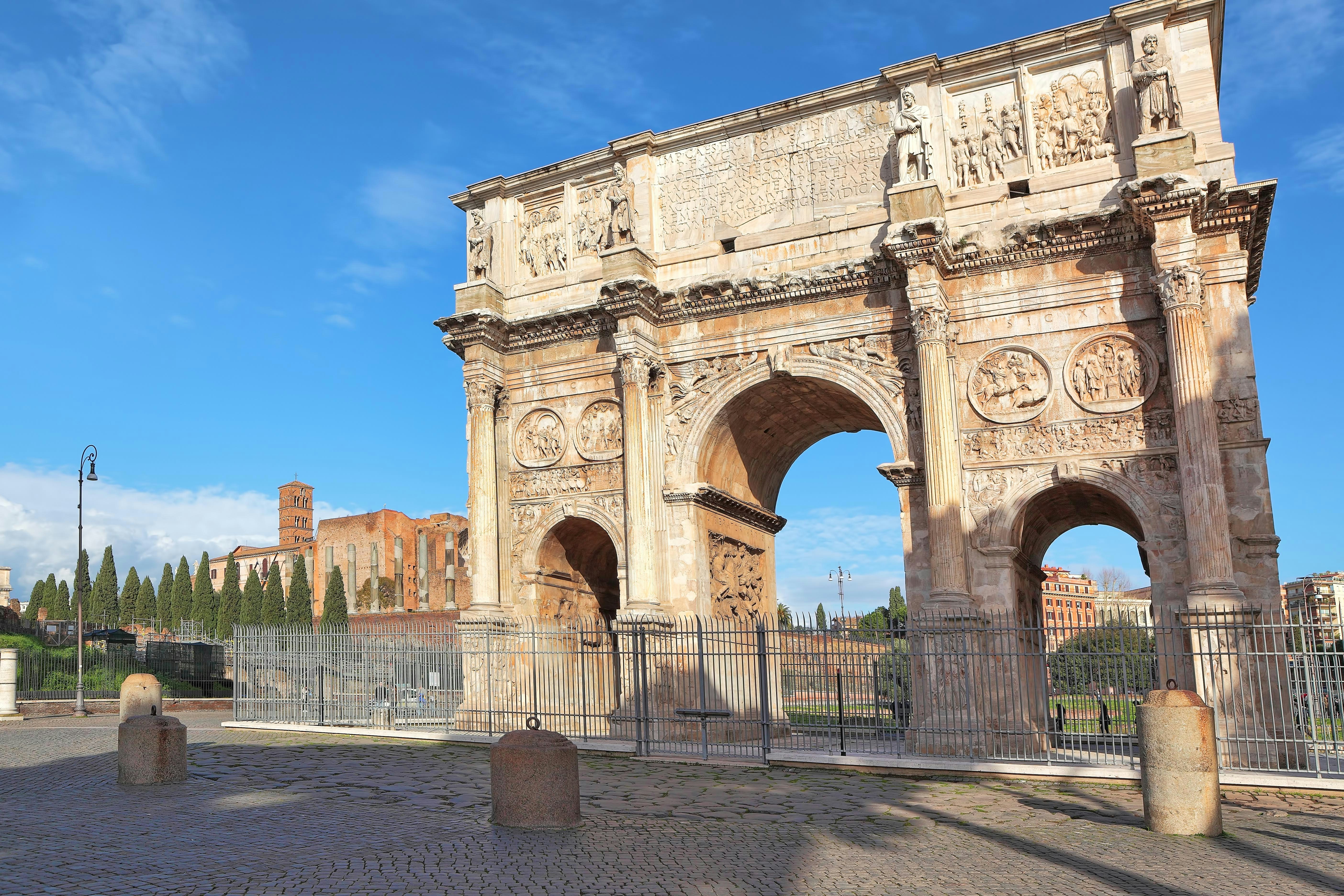
Arch of Constantine in Rome with detailed carvings and ancient architecture.
1/5

Tier II and III walkways

The upper tiers offer the best overhead view of the arena's elliptical shape and frame the Roman Forum and Palatine Hill beyond the outer walls. They're also less crowded than the ground level. Note that Tier III isn't included on all ticket types, so confirm before you book.

Pro-tip: The right side of Tier II, looking toward the Forum, gives you the best external framing and is usually the quietest section during peak hours.

The Arena floor [Paid add-on]

The partially reconstructed wooden floor gives you a sense of the original performance surface. Standing here and looking up into the seating structure is the view most visitors remember. Most people spend 20 to 30 minutes here, though many say they wish they'd stayed longer.

This is the most photographed spot and the one people most often describe as the moment the scale becomes real.

Pro-tip: Position yourself at the center of the floor and look toward the north entrance arch for the most complete view of the original seating layout.

The Hypogeum [Paid add-on]

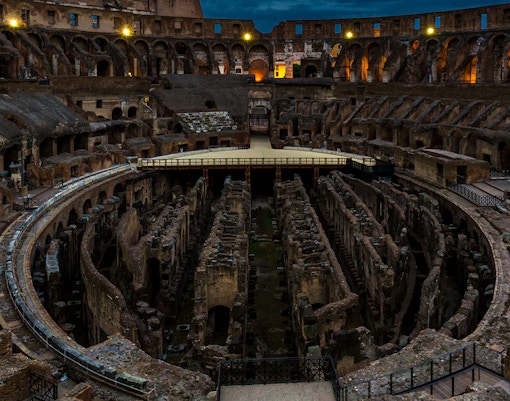
The underground network of tunnels, lifts, and animal holding pens that supplied the arena above. Standard tickets don't include access—you'll need a separate timed ticket, and entry is in small groups. The engineering is visible and easy to understand, even without specialist knowledge. This is the area that shifts the experience from a visual landmark to a functional one.

Pro-tip: Book your Hypogeum slot early in your visit, not at the end. The timed entry runs on a separate schedule, and starting underground before the arena crowds build makes the whole visit feel more logical.

The permanent exhibition

Located along the inner wall of the first tier, this exhibition covers gladiatorial social structure, the staging mechanics of the games, and the political role of the spectacle. Most visitors see it after the arena and wish they'd done it first. It takes about 20 to 30 minutes and is included in all ticket types.

Pro-tip: Do this before the arena floor, not after. The context it provides changes what you notice once you're down there.

The Arch of Constantine

Just outside the Colosseum exit, within the same site boundary. Built in 315 AD to mark Constantine's victory at the Battle of Milvian Bridge, it takes about 15 minutes and is better preserved than much of what's inside the Colosseum. Most visitors walk right past it.

Pro-tip: Exit via the south side of the Colosseum so you encounter the arch on your way out, rather than having to backtrack.

How to explore the Colosseum

  • Budget a minimum of two hours on a standard ticket. Three hours if you have hypogeum access. The hypogeum is best visited as the first stop after entry, before the main arena levels, as group sizes are small and the entry is timed separately.

  • Suggested sequence: Permanent exhibition first for context, then the arena floor, then Tier II for the structural overview and the Forum view, then the Arch of Constantine on exit. The hypogeum, if your ticket includes it, runs on a separate timed schedule; the operator will confirm your underground entry slot at check-in.
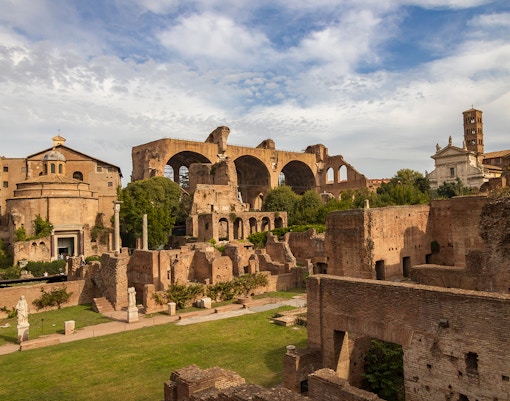
  • Must see: Arena floor, Tier II overview, Arch of Constantine. Add with more time: Tier III, hypogeum, Roman Forum. The Forum requires a separate entry if not on a combination ticket.
  • Customers who take a guided tour rate the experience higher on average than those who self-guide. The difference is most pronounced at the arena floor level, where the gladiatorial context is not conveyed by signage alone.

How to book this right

Colosseum entry

  • Colosseum, Palatine Hill & Roman Forum Access
  • Includes: Timed Colosseum entry covering the seating tiers and Level 2 museum. The Roman Forum and Palatine Hill can be visited any time within 24 hours. Audio guide available as an add-on. Optional upgrades to Arena Floor access or hosted entry.
  • Why pick this: The most flexible option. Visit the Colosseum at your chosen time, then return to the Forum and Palatine Hill when you're ready — no fixed schedule, no group to keep up with.
  • Does not include: A guide. The audio guide is an add-on, not automatic. Arena Floor access requires a separate upgrade.
  • Availability: The most widely available option. Book ahead to secure your preferred entry time, especially in peak season

Colosseum guided tour

  • Includes: Reserved group entry and a licensed guide through all three sites — Colosseum, Roman Forum, and Palatine Hill — in a single structured visit. Group sizes up to 25, 15, or 7 for a more personal experience.
  • Why pick this: The Colosseum's signage is limited and the site's layered history is hard to piece together independently. A guide covers all three landmarks in sequence and provides the context that makes the visit make sense.
  • Does not include: Arena Floor or Underground access.
  • Availability: Morning slots fill fastest. Small-group options (7 people) need the most lead time.

Colosseum tour with Arena floor access

  • Includes: Timed skip-the-line entry, a licensed guide through the Colosseum's seating tiers and Level 2 museum, and exclusive access to the Arena Floor via the Gladiator's Gate. Continues to the Roman Forum and Palatine Hill.
  • Why pick this: The Arena Floor is off-limits on standard tickets. This is the version that puts you at the center of the amphitheater, looking up into the tiers, with a guide explaining what happened there.
  • Does not include: Underground access.
  • Availability: Limited by preservation requirements. Book as far ahead as possible.

Colosseum Underground & Arena Floor tour

  • Includes: Guided access to the Colosseum's restricted underground chambers [the tunnels, cages, and lifts used to stage the games] followed by the reconstructed Arena Floor and panoramic seating tiers. Optional upgrade to include the Roman Forum and Palatine Hill.
  • Why pick this: The most complete version of the Colosseum itself. The Underground is inaccessible without a guide and transforms the visit from a visual experience into a functional one. You see exactly how the spectacle was engineered and staged.
  • Does not include: Roman Forum and Palatine Hill unless upgraded.
  • Availability: Strictly limited. The most restricted ticket type at the Colosseum. Book well in advance

Our pick: The Colosseum, Palatine Hill & Roman Forum Guided Tour (small group of 15 or fewer) for most first-time visitors. The site's signage doesn't do enough to explain what you're looking at, and the guided format covers all three landmarks in a single, structured visit. If it's your only trip to Rome, consider upgrading to the Arena Floor version; it's the part of the Colosseum most visitors wish they'd accessed

Before you book your Colosseum tickets

Need to know

  • Standard Colosseum tickets are timed-entry tickets; late arrivals may be denied entry during peak periods
  • The basic entry ticket does not include arena floor or hypogeum access; check your ticket inclusions carefully before booking
  • Large backpacks, suitcases, and wheeled luggage are not permitted inside, and there are no cloakroom facilities on-site
  • Wheelchair access is available for the ground and first levels, but the upper tiers and some underground sections are not fully accessible

Worth knowing

  • The first entry slot of the morning is noticeably less crowded and offers the best conditions for photos and guided tours
  • Guided tours make a major difference at the Colosseum, especially in the arena and Roman Forum, where signage is limited
  • Combo tickets covering the Colosseum, Roman Forum, and Palatine Hill are usually valid across two consecutive days, so you do not need to visit all three sites in one visit
  • The Arch of Constantine closes before the main Colosseum site on some days; check current hours if this is on your list

Find the best Colosseum experiences >

What headout customers say

Loved by 50 million+
Trustpilot rating: 4.5 out of 5

Irina G

Armenia
Couple
4 days ago
All was great, I really enjoyed all the rooms. It desplayed masterpieces of different artists and periods of time. I felt the history myself.

Mariam A

Georgia
Group
5 days ago

+1 more

Everything went smoothly, no lines - we skipped everything, audiophile was also helpful, so over all it was an excellent experience

Deryk R

United Kingdom
Couple
6 days ago

+3 more

The history, the architecture, the mesuem, the half way arena built on top of wooden beams supports. Ontop of the advice to visit the Roman forum and Palestine hill from our trusted guide tours that saved us a hefty wait time.

Patrycja A

Poland
Family
Last week
Everything went exactly as expected and as described in the app. Picking up the tickets went smoothly (although, unfortunately, the system at the ticket counter crashed for a few minutes). We arrived at 5 p.m. and had enough time to see the Colosseum, the Roman Forum, and the Palatine Hill.

Ivan A

Spain
Couple
Last week
An incredible and truly wonderful experience—I highly recommend it. It’s one of the most beautiful places in Rome, and I’d love to go back again.

Denise L

New Zealand
Couple
Last week
Headout has been easy to hook great tours through. Underground Collesseum on Monday, Castel San.Angelo today. Fantastic history and so easy booking ahead.

Tanya O

Switzerland
Couple
Last week
A really interesting and wonderful tour! Our guide, Valentina, gave clear explanations and provided fascinating background information! It was a long walk, but we weren’t bored for a single moment. She guided us smoothly through the crowded museum and eventually to St. Peter’s Basilica without any lines. Thanks for the fun afternoon!

Aleksei Z

Cyprus
Solo
Last week
Susanna was just awesome, showed everything in a pleasant 3 hours Spanish tour, that flew just like 5 minutes. One of the best experiences ever, highly recommended. Easy to find the meeting point, nicely organised, visit only highlights with no necessity to discover yourself. Just take the unpacked treasury of art prepared for you to enjoy!

Brief history of Colosseum

70–80 AD: Construction and opening

  • In a bold political move, Emperor Vespasian drains Nero’s private lake to build a gift for the people.
  • His son Titus inaugurates the "Flavian Amphitheatre" in 80 AD with a 100-day festival so grand it reportedly claimed the lives of 9,000 animals.

1st–4th centuries: The heart of Roman spectacle

  • The amphitheater is used for gladiator fights, animal hunts, public executions, re-enactments of famous battles, and occasionally staged sea battles in the early years.
  • It holds an estimated 50,000–80,000 spectators, with crowds attending as a form of state-sponsored, often free, entertainment.

5th–6th centuries: A fading arena

  • As the Empire converted to Christianity and faced economic strain, the bloodsports grew taboo. Gladiatorial combat was banned first; the last references to gladiator fights date to the 5th century.
  • Animal hunts and other spectacles continue for a time before the arena falls out of regular use.

Discover the full story of the Colosseum >

Middle Ages: The great stone quarry

  • Earthquakes and neglect damage the structure and Romans start treating it as a "stone quarry," stripping its travertine to build the Vatican and local palaces.

  • The Colosseum is repurposed over the centuries as housing, workshops, a fortress, a place of worship, and a source of building materials.

Modern era: Symbol and monument

  • From the 18th–19th centuries, interest in preserving the Colosseum grows, and major stabilization and restoration campaigns begin.
  • Today, it is one of the most visited monuments in the world, a symbol of imperial Rome, and a protected archaeological site open to visitors with different ticket types and guided tours.

Discover the full story of the Colosseum >

Colosseum architecture and design

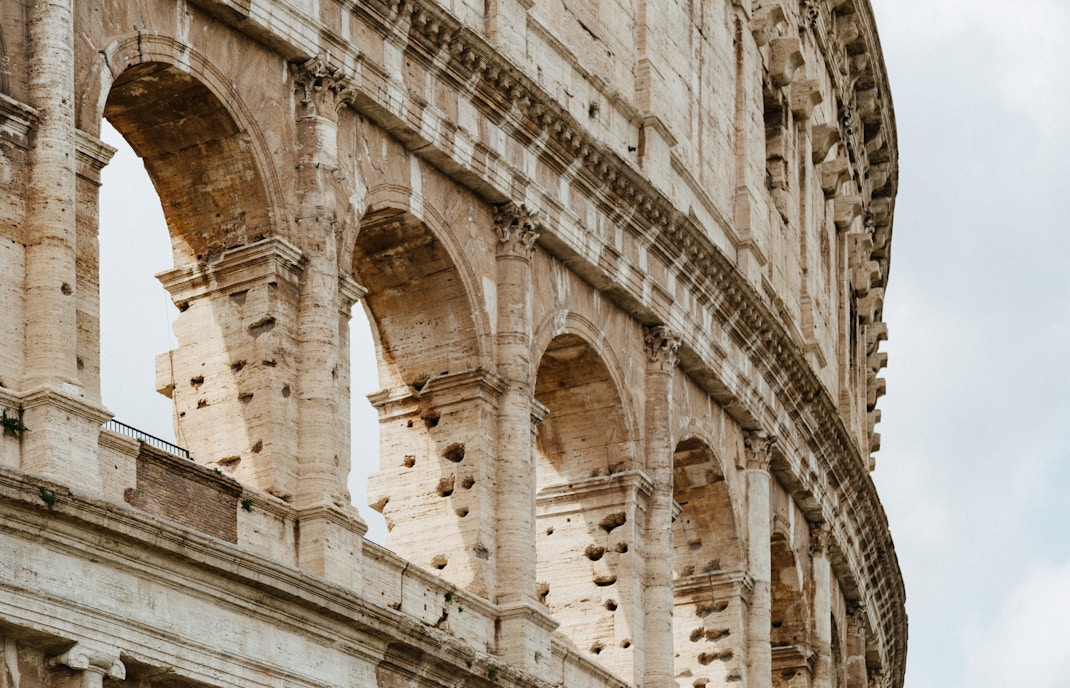
Colosseum's outer ring with arches and surrounding street in Rome, Italy.

Rising nearly 50 meters above ancient Rome and spanning over six acres, the Colosseum was built to impress. Even in partial ruin, it remains one of the greatest engineering achievements of the Roman Empire and one of the world’s most recognizable landmarks.

  • An iconic Roman landmark: The Colosseum once featured four levels of arches arranged in perfect symmetry, clad in white travertine stone. 80 numbered entrances allowed crowds to move efficiently through the arena, a design that still influences modern stadiums today.
  • Built for spectacle: Unlike Greek theaters carved into hillsides, the Colosseum was constructed as a free-standing amphitheater on flat ground using concrete, arches, and vaulted corridors. This innovative design allowed it to hold an estimated 50,000 to 80,000 spectators, with seating carefully organized by social class.
  • The underground world beneath the arena: Beneath the arena floor lay the hypogeum, a vast underground network of tunnels, cages, and mechanical lifts. Gladiators, stage crews, and wild animals moved through this hidden space before emerging dramatically into the arena through trap doors. Above the seating area, a giant retractable awning called the velarium helped shield spectators from the sun.

Today, the Colosseum’s weathered arches and exposed underground chambers offer a powerful glimpse into the scale, spectacle, and ambition of imperial Rome.

How Roman engineering shaped the Colosseum

Frequently Asked Questions

The Colosseum is the largest amphitheater ever built by the Romans and once hosted gladiator battles, animal hunts, and public spectacles. Today, it remains one of Italy’s most iconic landmarks and a symbol of ancient Roman engineering.

More reads